
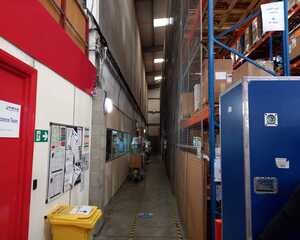
Emergency lighting is one of the most important safety systems in any commercial, industrial or public building. When the normal lights fail, people rely on clear, visible guidance to move through corridors, stairwells and exits safely.
In the UK, emergency lighting is a legal requirement. Building owners and employers must ensure their premises have suitable, reliable escape lighting that will function the moment it is needed.
Understanding what the law requires, and how modern LED systems support compliance, is essential for facility managers, health and safety officers and anyone responsible for maintaining a safe workplace.
What emergency lighting is designed to do
Emergency lighting activates automatically when the normal power supply fails. Its purpose is to provide enough illumination to allow occupants to evacuate quickly and safely. This includes lighting escape routes, highlighting changes in floor level, keeping staircases visible and identifying fire safety equipment and exits.
Escape lighting should help prevent panic and keep people oriented, even in complete darkness. In larger open-plan areas, additional anti‑panic lighting may be needed to ensure people can see well enough to move toward escape routes without confusion or delay.
The regulations you must comply with
In the UK, emergency lighting is governed by BS 5266, along with UK Building Regulations. These standards outline how escape routes must be lit, where fittings should be positioned and how long they must operate during a power outage.
One of the core requirements is that escape routes must be illuminated to at least 1 lux along the centre line. In high‑risk task areas, such as workshops or plant rooms, higher levels may be required so machinery can be shut down safely. The system must also operate for a minimum of 3 hours on battery backup, ensuring the building remains safe even during long-duration incidents.
Exit signs also have specific requirements. They must be clearly visible, consistently illuminated and easy to follow. In many cases, maintained exit signs – which stay lit at all times – are used to provide constant guidance.
Maintained and non‑maintained fittings
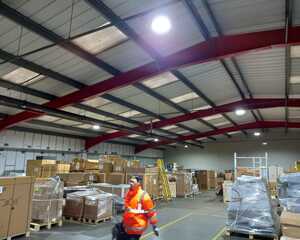
Emergency lighting falls into two main categories: maintained and non‑maintained. Maintained fittings operate as normal lights but remain illuminated during a power failure. They are often used in public spaces like theatres, hospitality venues or large retail environments where an illuminated sign or fitting must always remain visible.
Non‑maintained fittings stay off during normal operation and switch on only when the power fails. These are common in workplaces, offices and industrial buildings where the primary lighting is already sufficient during everyday use. The choice between the two depends on the building type, risk level, and required visibility of exit routes.
Why you must regularly test your lighting systems
It is the responsibility of the building owner or duty holder to test emergency lighting systems regularly. The law requires monthly functional tests, where the mains supply is briefly interrupted to ensure the emergency lights activate correctly. An annual full‑duration test must also be carried out to check that batteries can sustain the required three‑hour run time.
All tests must be recorded in an emergency lighting logbook, as these records may be requested during fire safety audits or insurance inspections. Missing or incomplete records can put a business at risk of non‑compliance, even if the lights themselves are working properly.
Modern self‑testing emergency lights
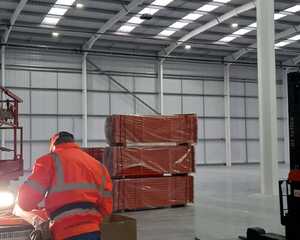
Manual testing can be time‑consuming, especially in buildings with many fittings. Self‑testing emergency lights simplify the entire process, as units carry out their own monthly and annual checks automatically, displaying visual indicators when a fault is detected.
Self‑testing fittings reduce maintenance workload, eliminate the risk of forgotten tests and provide greater reliability. They also help facility managers identify faults quickly, ensuring any issues are resolved before they pose a safety risk.
The advantages of LED emergency lighting
LED emergency lighting offers significant benefits compared to older fluorescent technology. LEDs draw much less power, which means the batteries supporting them last longer and maintain their charge more reliably. Their low heat output reduces stress on internal components, extending service life and improving long‑term performance.
LED emergency fittings also produce clearer, more consistent light. This, in turn, improves visibility during evacuations and helps occupants identify exit routes immediately. With typical lifespans reaching 50,000 hours or more, LEDs also reduce maintenance costs and provide dependable performance for years at a time.
Common causes of lighting system non‑compliance
Many buildings fall short of emergency lighting requirements without realising. Problems often arise when layouts change and fittings are not repositioned, leaving shadows or unlit escape routes. Outdated fluorescent emergency fittings may also fail silently, especially when batteries degrade over time.
Another common issue is insufficient testing. Even the best emergency lighting system is not compliant unless it is regularly checked and documented. Ensuring fittings are correctly placed, properly maintained and tested on schedule is essential for meeting BS 5266 and staying protected under insurance.
Creating a safe and compliant environment
Upgrading to LED emergency lighting is one of the most effective ways to improve safety and streamline maintenance. The combination of long‑life components, lower power consumption and self‑test capability creates a system that is both reliable and cost‑effective.
LEDLights4You provides fully compliant emergency lighting solutions designed to meet current standards and deliver dependable performance. From site surveys to installation and commissioning, every system is specified to ensure safe evacuation conditions and long‑term reliability.
Emergency lighting is a vital safety measure that protects your staff, visitors and business. Ensuring your lighting is compliant, tested and up to date gives you confidence that your workplace remains safe even in unexpected circumstances.
Posted by Paul on December 23rd 2025


 Updating page...