
For decades, fluorescent lighting has been a staple in commercial buildings. Today, facilities such as offices, schools, and hospitals still often rely on outdated tubes, recessed fittings, or older battens that waste energy and fail frequently.
When unfit-for-purpose fittings begin to fail, understandably, many businesses start by looking for a like-for-like replacement. A better course of action is to review the entire lighting setup and choose an LED solution that suits the space properly.
The advantages are manyfold. Upgrading from fluorescent to LED can reduce energy use, improve light quality and lower maintenance demands.
Of course, the method in which the upgrade is carried out has a major influence on the outcome. A simple tube swap may reduce wattage, but it may leave an ageing fitting, poor layout and uneven light distribution in place.
A well-planned switch to LED panels, LED battens, or other commercial LED fittings can create a cleaner, safer, and more efficient working environment.
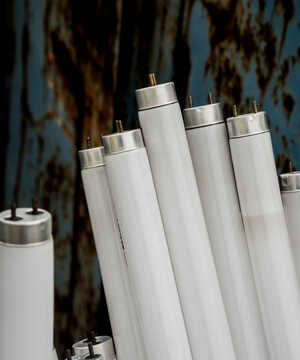
The problems with old fluorescent lighting
Fluorescent tubes are known for high energy use compared with modern LED alternatives.
As they age, they can also flicker, hum, discolour and lose brightness; a gradual decline which is easy to overlook as it happens over time. Staff may only notice when tubes begin to fail completely or when certain areas become visibly dull.
Light degradation can affect the way a workplace functions. In offices, poor lighting can contribute to eye strain, headaches and screen discomfort. In workshops and manufacturing areas, low or uneven light can make detailed tasks harder to complete. In retail and showroom environments, tired lighting can make products look flat or colour inaccurate. In corridors and communal spaces, dim areas can create a poor impression and reduce confidence in the building.
Fluorescent tubes also contain mercury, which means they must be disposed of correctly. When businesses replace large numbers of tubes, responsible recycling should be planned as part of the project. Old lamps should not be treated as general waste, and broken tubes need careful handling.
Caution on LED retrofit tubes
Whilst this looks to be a cheap solution, the fitting's internal connections are likely to be 20 years plus. These fittings can be a fire hazard as the insulation will be heat-damaged, along with burning of the tube connectors. We would not recommend this option; it is better to replace it with a purpose-built unit.
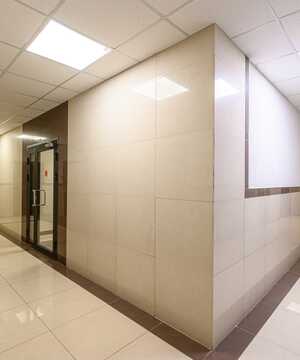
Purpose-built LED panels and battens
Purpose-built LED fittings are designed around the LED light source from the outset, typically delivering more reliable long-term results than fitting new tubes into old housings.
LED panels are often used in suspended ceilings and office environments, while LED battens are commonly used in corridors, workshops, storage rooms, plant areas, utility spaces and industrial settings.
A good quality LED panel can provide even, low-glare light across a workspace – particularly useful in offices, classrooms and healthcare settings where people spend long periods under artificial lighting.
LED battens can provide robust, efficient illumination in practical working areas, with options available for higher ingress protection, emergency use and sensor control.
Modern LED fittings also allow the layout to be reviewed. Fluorescent fittings are often replaced on a one-for-one basis, but this can cause problems of its own. LED panels have a higher light output and better distribution than older fluorescent fittings, so a direct swap may create excessive reflected light on desks and surfaces.
In some spaces, fewer fittings may be needed to achieve the correct lux level. A lighting survey helps avoid over-lighting and ensures the finished system suits the room.
Choosing colour temperature and output
Colour temperature strongly impacts how a space feels and performs. Many commercial environments use 4000K because it provides a clean, neutral white light suitable for offices, classrooms, corridors, and general working areas.
Warmer options can suit hospitality or reception areas, while cooler tones may be used in some industrial, inspection or specialist environments.
The appropriate lumen output should be selected based on the size of the space, ceiling height, surface finishes, available daylight, and the type of work being carried out.
It’s important to remember that more lumens are not always better.
Excessive output can create glare and discomfort, while insufficient output can leave the space unsafe or difficult to work in. The aim is to achieve the correct lux level across the working area.
It’s here where many simple replacements fall short. A lighting design should consider reflected light, not just the fitting's brightness. Desks, floors, walls, machinery and racking all affect how light behaves in the room. A lighting survey should assess existing lighting, energy use, maintenance costs, and lux levels, helping businesses choose the right products before installation begins.
Checking the ceiling and installation requirements
Before replacing fluorescent tubes or fittings, the ceiling type and installation method should be checked.
In suspended ceilings, panel size and grid compatibility are key. Some older fittings may be integrated into ceiling systems, making the upgrade more complex. Surface-mounted panels, recessed panels or adapted fitting solutions may be required depending on the site.
For batten replacements, mounting height, fixing points, cable routes, and environmental conditions should all be reviewed. A dry office corridor will have different requirements from those of a warehouse, garage, plant room, or loading bay. If the area is dusty, damp or exposed, an IP-rated fitting may be needed.
Emergency lighting should also be considered during the upgrade. Some fluorescent fittings may currently include emergency backup, and these should be replaced with suitable LED emergency versions where required. This is a good time to review escape routes, signage and testing arrangements so the new system supports compliance as well as everyday lighting.
Safe removal and recycling
A professional upgrade should include safe removal of old fluorescent tubes and fittings. Tubes containing mercury require proper handling and recycling, and any damaged components should be disposed of through appropriate channels.
Businesses replacing large quantities of fluorescent lighting use LEDLights4You for RECOLITE-licensed disposal of toxic waste. We provide coffins for this purpose, ordered in advance so the project remains clean, safe and compliant from start to finish.
The existing electrical condition should also be checked. Older fittings may have heat damage, failed components or wiring that needs attention before new products are installed. Qualified lighting installers can identify these issues and ensure the replacement system is fitted safely.
Getting the upgrade right
Moving from fluorescent tubes to LED lighting is a valuable opportunity to improve the whole environment of a business premises.
Generally, a redesign is recommended for commercial buildings, with energy savings of up to 90%. With purpose-built LED panels, battens and properly specified fittings. The result can be better light distribution, lower glare, reduced maintenance and more efficient operation.
LEDLights4You can assess your current lighting, check lux levels, review the condition of the fittings, and recommend the right LED solution for your space. With the right planning, a lighting upgrade can reduce energy use while creating a brighter, safer and more comfortable workplace.
Posted on June 30th 2026


 Updating page...