
Why energy costs are such a challenge
Energy costs in the UK continue to place an immense strain on businesses of all sizes; now at a significant competitive disadvantage, paying roughly four times as much for electricity as their US counterparts and at least 50% more than major European rivals such as France and Germany.
Warehouses, retailers, hospitality venues and distribution hubs all feel the pinch sharply where lighting is in constant use. In many workplaces, lights go on at the start of the day and stay on. That is simply how the building operates.
Staff are focused on doing their jobs, not on switching off lights in empty rooms, corridors, or work areas. Over time, that becomes a major source of wasted energy.
How lighting upgrades can cut costs
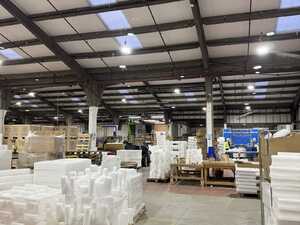
For many businesses, lighting is one of the biggest electrical loads in the building. In some premises, it can account for up to 70% of overall electricity use. That is especially common where older fluorescent, metal-halide, or sodium high-bay fittings are still in place.
This makes lighting one of the clearest opportunities to cut operational costs. A well-planned upgrade can reduce electricity consumption, improve light quality and lower maintenance demands at the same time.
The problem with older lighting
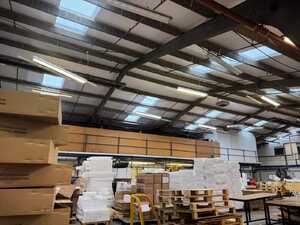
Older lighting systems are expensive to run and expensive to maintain. They often produce uneven light, lose output as they age, and require regular replacement of lamps, tubes, or control gear. In commercial and industrial settings, those maintenance issues also bring labour costs, disruption, and equipment access into the picture.
There is also the day-to-day effect on the workplace. Poor lighting can create shadows, glare, eye strain and uncomfortable working conditions. In warehouses and production areas, it can affect visibility and safety. In retail settings, it can affect presentation. In offices, it can lead to complaints about headaches, glare and tired eyes.
Why LED retrofits need planning
A proper LED upgrade starts with design. LED fittings perform very differently from older fluorescent and metal halide lights, so a one-for-one replacement is rarely the best option. Without planning, businesses can end up with over-lighting, under-lighting or wasted energy.
That is why surveys, LUX readings and layout reviews are so important. The aim is to properly match the lighting to the space, reduce unnecessary fittings where appropriate, and produce a better overall result. With a professional retrofit, businesses can often achieve energy savings of 80% or more compared with older lighting systems.
How microwave sensors add even more savings
LEDs reduce the amount of electricity used when lights are on. Microwave sensors reduce the time lights need to be on at all.
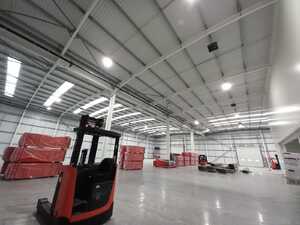
This is particularly valuable in buildings where people move in and out of different spaces throughout the day. Corridors, storage areas, stairwells, toilets, warehouses and communal areas are all strong candidates. Instead of lights burning for hours in empty areas, microwave sensors allow lighting to respond automatically to movement and available daylight.
There are additional benefits to using microwave sensor control rather than standard PIR systems. Microwave sensors offer wider coverage and can detect smaller movements, making them well-suited to larger commercial premises and more complex layouts. Additional savings of up to a further 60% can be achieved through intelligent sensor control, particularly where dimming or corridor functions are used.

A practical way to reduce operational costs
For UK businesses looking to reduce overheads, advanced lighting solutions offer a practical route to lower energy use and better performance. LED upgrades cut consumption, improve reliability and reduce maintenance. Microwave sensors help prevent energy waste in unoccupied or naturally lit areas.
Together, they create a stronger lighting strategy for modern commercial premises. With the right design and installation, the result is a brighter, more efficient workplace and a faster return on investment.
Ready to review your lighting?
If your business is still relying on fluorescent, metal halide or other older lighting systems, now is the time to review what those fittings are really costing you. A professional survey can identify where energy is being wasted, where lighting levels need improving and what sort of savings may be possible with a smarter LED and sensor upgrade.
Posted on April 21st 2026


 Updating page...