
Adhering to lighting regulations can feel like a challenging undertaking – especially when duty holders are balancing energy targets, maintenance budgets and day-to-day operations.
In reality, the goal is straightforward. Every workspace needs suitable lighting for the task being carried out, safe movement through the building and dependable emergency performance if mains power fails.
A structured approach helps organisations meet expectations set by HSE guidance, align with recognised standards, and reduce risk across offices, industrial sites, and public-facing premises.
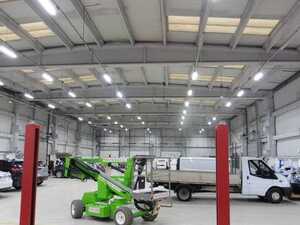
Understand how guidance applies to real work places
In short, different environments require different light levels. General circulation routes often require lower illumination than detailed workstations, while precision tasks demand greater clarity and visual control. As a practical guide, many workplaces operate around 200 to 300 lux in corridors and circulation spaces, around 500 lux for detailed desk-based or assembly-style tasks, and lower minimums in certain storage zones depending on activity and access requirements.
What matters most is fitness for purpose. Teams should be able to read labels, identify hazards, use equipment safely and move through routes without strain. A compliance-minded lighting plan starts by mapping tasks and occupancy patterns, then confirming that measured light levels match operational needs in each zone.
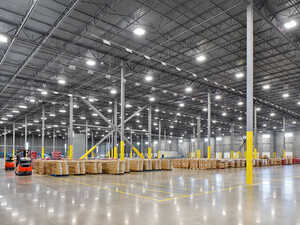
Use recognised product standards for build quality
Compliance is influenced by fixture quality as well as lighting levels. Commercial luminaires should meet the relevant product standards, including BS EN 60598, so that build quality, electrical safety and durability are appropriate for workplace use.
In procurement terms, this reduces the risk of early failures, unstable performance and repeated maintenance disruption.
For high-use commercial sites, lifespan and warranty also require careful scrutiny. Long service life claims should be supported by credible specifications and supplier documentation. Where lights are installed in hard-to-access areas, robust product choice becomes a safety and maintenance issue as much as a financial one.
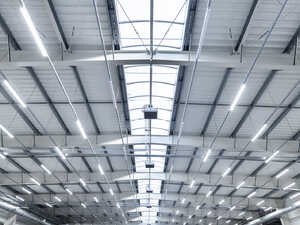
Match IP ratings to environmental conditions
Ingress protection is a core safety consideration in industrial and mixed-use properties. Dust, moisture, washdown exposure and external weather all influence the right rating for each area. In many factories, yards and service zones, higher protection such as IP65 or above is often required to maintain reliability and reduce electrical risk in harsher conditions.
Internal office spaces may not require the same level of sealing, but specifications should still reflect local conditions, including humidity, cleaning regimes, and occasional splash risk in utility areas. Correct IP selection improves reliability and helps maintain compliance over time by reducing avoidable failures.

Carry out a practical lighting risk assessment
A useful lighting risk assessment combines measurement, visual inspection and operational review. Lux readings should be taken at the task plane, and any assessment should identify glare, excessive contrast, shadowing and overlit surfaces that can cause visual fatigue. In screen-based workplaces, reflected glare can quickly become a comfort and performance issue.
The review should include routes used during shift changes, delivery windows and cleaning periods, since risk can vary by time of day. If occupancy patterns have changed, existing controls and timings may no longer suit actual use. Updating control logic and zoning can resolve these issues quickly while improving energy performance.
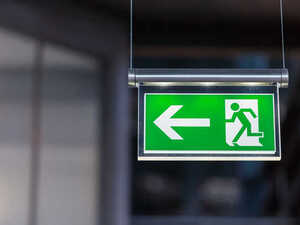
Keep emergency lighting compliant and testable
Emergency lighting remains one of the most important safety systems in any workplace.
Escape routes, exits, and critical points need reliable illumination during power failures, and systems should be maintained in accordance with current guidance and testing expectations. Regular testing, clear records and prompt fault correction are essential for audit readiness and building safety.
Many organisations now adopt self-test emergency fittings to reduce manual workload and improve fault visibility. Such an approach helps facilities teams maintain compliance consistency across larger estates, particularly where monthly and annual checks are otherwise difficult to coordinate.
Connect compliance with energy and maintenance planning
An effective compliance strategy can also improve financial performance. Efficient LED systems with well-configured controls reduce run hours and energy waste while maintaining suitable light levels. Occupancy sensing and daylight-linked controls are particularly effective in areas and buildings that are used intermittently and have variable natural light.
Maintenance planning should always sit alongside compliance planning. Scheduled inspections, cleaning and performance checks protect light quality and reduce unplanned outages. In high-ceiling or live operational sites, this also limits disruption and improves safety for maintenance personnel.
Build confidence through documented design and handover
To sustain compliance, documentation needs to be complete and accessible. That includes design intent, product specifications, test certificates, commissioning records and maintenance schedules. Clear records make future audits easier and help teams manage changes to layout, occupancy or process without drifting out of compliance.
Workplace lighting standards are manageable when approached methodically. Define task needs, specify compliant products, verify performance with measured data and maintain emergency readiness.
With a framework in place, you can support safer buildings, stronger operational performance, and a lighting system that remains effective as your workplace evolves.
Posted on February 9th 2026


 Updating page...