
For UK schools, academies, colleges, and universities, the summer break provides the most practical window of opportunity to review and upgrade lighting systems.
With empty buildings and more accessible classrooms, corridors, and sports halls, contractors can work around fewer day-to-day pressures. A well-planned summer lighting project can improve learning spaces, reduce energy costs and bring older systems up to modern standards before students and staff return.
Why summer is the ideal time for an educational lighting upgrade
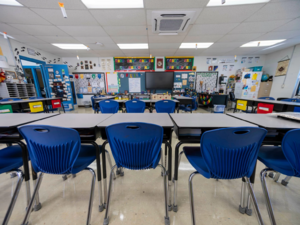
Upgrading lighting in educational buildings presents significant challenges during term time, as even minor installations can disrupt lessons, exams, sports sessions, and safeguarding procedures.
The summer holidays provide the flexibility needed to access classrooms, corridors, and communal areas without interrupting daily routines, making the summer break an ideal window for efficient, safe, and well-phased installations.
Lighting engineers can move through the site efficiently, using powered access equipment with fewer restrictions and completing large areas without working around a full school day. For multi-building projects, installation phases can be planned smoothly around summer clubs, administrative teams, or scheduled maintenance.
Auditing your existing education lighting systems effectively
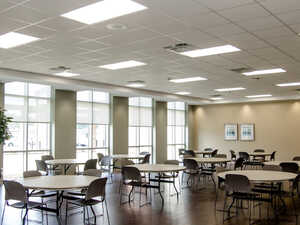
Educational buildings place heavy demands on lighting. A single site often encompasses classrooms, laboratories, corridors, offices, toilets, kitchens, libraries, studios, sports halls, changing rooms, halls of residence, and external areas. And, because each space serves a distinct purpose, every area must be properly and individually assessed.
Simply replacing old fittings on a strict one-for-one basis frequently creates problems, particularly when legacy fluorescent lights are swapped for brighter LED panels without accounting for LUX levels, glare, or how the room is actually utilised.
A professional lighting survey accurately identifies under-lit areas, over-lit spaces, failing fittings, and inefficient layouts, revealing clear opportunities to rationalise the number of units while significantly enhancing visibility.
Classroom lighting for comfort and concentration
In classrooms, lighting must effectively support concentration, reading, writing, and screen time across the school day. Inadequate lighting can lead to glare on desks, reflections on whiteboards and monitors, uneven coverage, and eye strain for both pupils and teachers.
Older fluorescent lighting typically delivers low, uneven light levels, while unsuitable LED replacements can go too far in the other direction and overlight the room. Effective lighting design helps create a balanced environment, using low-glare LED panels at a suitable colour temperature.
While teaching spaces typically require lighting levels of around 300 LUX, evening classes, adult education, and detailed tasks often demand higher levels. The goal is to provide sufficient illumination for the specific work being done without creating glare on desks, paper, or screens.
A professional site survey is an essential first step. It allows engineers to take LUX readings, measure existing performance, identify problem areas, and design an appropriate layout before installation starts.
Specialist lighting for labs, studios and practical spaces
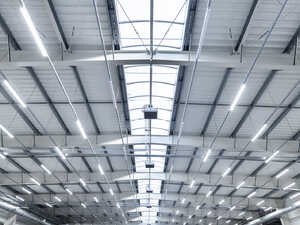
Specialist education spaces demand careful consideration. Science labs, technology rooms, and art studios require higher illuminance and greater precision so students and staff can see intricate details clearly. For art and design spaces, colour temperature and colour rendering are critical metrics, as substandard lighting distorts the true appearance of paints, fabrics, and printed work.
In practical classrooms, workshops and laboratories, good visibility also supports a safer working environment, especially where tools, equipment or chemicals are being used. The right lighting scheme should consider the type of activity taking place, the height of benches or work surfaces, shadowing, glare and the need for consistent illumination across the room.
Sports hall and gym lighting
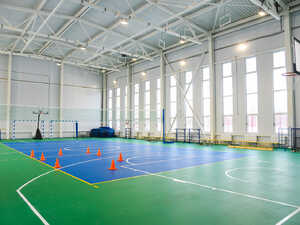
Sports halls and gyms bring another set of challenges. Lighting is usually mounted high up, so fittings need to be powerful, robust and reliable. Old fluorescent or metal-halide fittings can be expensive to maintain, particularly when access equipment is required to replace bulbs or perform repairs.
LED high bays and high-efficiency LED battens can provide bright, even illumination with instant switch-on, no warm-up time and much lower maintenance requirements. In sports environments, careful positioning helps reduce shadows and improve visibility across the whole playing area. Robust fittings are also important in areas where lighting may be exposed to balls, equipment or regular vibration.
Emergency lighting and student safety
Emergency lighting in schools and education spaces should also be reviewed as part of a summer lighting upgrade. Schools, colleges and universities have a duty to keep escape routes visible during a power failure. Exit routes, staircases, changes in floor level and key safety areas all need suitable illumination.
Older emergency fittings may have failing batteries or outdated fluorescent technology, so upgrading to LED emergency lighting can improve reliability and reduce ongoing maintenance. Self-testing emergency lights can also help reduce the time spent on manual monthly checks, while making faults easier to identify and resolve.
Planning your summer lighting project
Spring is the ideal time to arrange a lighting survey, assess existing fittings, discuss budgets, and identify priority areas. Starting the process now allows time to prepare lighting reports, energy-saving calculations, and product specifications. It also ensures that installation timelines, RAMS, equipment hire, and essential electrical documentation are fully signed off before the summer holidays start.
LEDLights4You provides lighting surveys, consultancy, installation and aftercare for educational environments – our team can assess existing fittings, take LUX readings, recommend suitable LED products and plan an installation programme around the needs of the site.
A brighter start to the academic year
Investing in a summer lighting upgrade prepares educational buildings for the new academic year, making them brighter, safer, and significantly more efficient.
The right design enables schools, colleges, and universities to lower energy consumption, improve visual comfort, and provide high-quality teaching and learning environments for staff and students.
Posted on June 1st 2026


 Updating page...