
Commercial buildings often receive far more natural light than their lighting systems might recognise. Warehouses with rooflights, offices with large windows and atriums with glazed roofs may still run every electric fitting at full output throughout the day.
Daylight harvesting allows businesses to use the available light while maintaining consistent illumination across the building.
The technology combines efficient LEDs with sensors and automatic controls. As daylight fluctuates, the system adjusts nearby fittings to maintain a chosen light level – thus reducing unnecessary electricity use without relying on staff to manage switches throughout the day.

What is daylight harvesting?
Daylight harvesting is an automated lighting control strategy that measures the natural light entering a space. Photocell sensors or integrated smart sensors monitor ambient light and communicate with dimmable LED fittings.
The controls compare available light with a predetermined target, usually measured in LUX. When daylight provides enough illumination, electric lights dim or switch off. When daylight decreases, the fittings gradually increase their output to keep the working area properly lit.
The process responds automatically to changing weather, seasonal conditions and the movement of the sun. A well-designed system creates a stable lighting environment while reducing the hours that fittings operate at full power.

How the system works throughout the day
Think about a warehouse with large rooflights. Early in the morning, the lighting may operate at a relatively high output because natural light levels are low. As the sun rises, sensors detect increasing daylight and begin dimming the high-bay fittings beneath the rooflights.
With microwave sensors, lights are automatically switched on and off depending on occupancy. Using the daylight function, the lights will switch on only when light levels fall below the desired LUX level. On a bright summer afternoon, some fittings may remain off, while units in darker areas will automatically switch on where the area is occupied. If clouds pass over the building, the lights will switch on as programmed. At dusk, they gradually return to the level required for safe and comfortable working.
The adjustment is especially useful where daylight varies considerably across the floor. Lights near windows or rooflights can operate differently from those in internal areas, allowing each zone to use only the electricity it requires.
Where daylight harvesting works best
The strongest opportunities are found in spaces with dependable natural light. Warehouses and distribution centres often have rooflights that illuminate large sections of the building. Open-plan offices may receive substantial light through perimeter windows, while atriums, showrooms, educational buildings and production facilities can also benefit from intelligent zoning.
Building layout affects the design. Racking, partitions and machinery influence how daylight travels through a space. A professional lighting survey can establish where sensors should be positioned, how zones should be arranged and which target lux levels are appropriate for the work taking place.

The main components of the system
Dimmable LED drivers allow fittings to dynamically increase or reduce output. Sensors measure ambient light and send information to the control system. These may be separate photocells or integrated microwave sensors that detect both occupancy and light levels.
Combining daylight and occupancy control creates a highly efficient system. Daylight sensing reduces output when natural light is available, while occupancy sensing dims or switches off lighting when an area is empty. In a warehouse aisle, lights may remain at a low background level when unoccupied and rise immediately upon detecting movement.
Wireless controls can add to the flexibility by reducing the need for extensive control cabling. Zones, timings and sensor settings can also be adjusted more easily when a building layout changes.
Benefits beyond lower electricity use
The financial benefit comes from reducing the time fittings spend at full output. LEDs already use considerably less electricity than older fluorescent or metal halide lighting. Daylight harvesting further improves efficiency by matching output to accurate conditions.
Reduced operating hours can extend the useful life of LED fittings and drivers. A unit that spends part of each day dimmed places less demand on its components, which can reduce maintenance requirements and delay replacement costs.
Occupants also benefit from more consistent lighting. Large differences between bright windows and heavily lit internal areas can create visual discomfort. A calibrated control system balances natural and electric light, helping create a cleaner and more comfortable working environment.
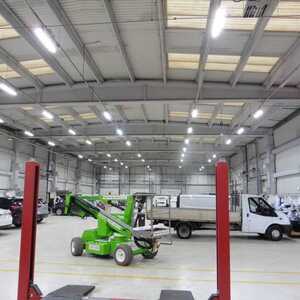
Why a correct lighting setup is essential in commercial environments
Sensors need careful positioning and calibration. A sensor obstructed by shelving or machinery may receive an inaccurate reading. A unit positioned too close to a window may perceive the whole room as brighter than it is, leaving internal work areas underlit.
Setpoints should reflect the activities in each zone. A warehouse aisle, office desk, production bench and loading area may all require different illumination levels. The system should respond gradually, avoiding frequent or noticeable changes that distract occupants.
Commissioning allows the lighting engineer to test each zone and adjust sensitivity, hold times and dimming levels. Settings should also be reviewed when racking, partitions or working layouts change.
Planning a smarter lighting upgrade
Daylight harvesting performs best as part of a properly designed LED lighting system. A survey can assess existing fittings, natural light sources, operating hours, lux levels, and occupancy patterns – information which supports an accurate design and a realistic forecast of potential savings.
LEDLights4You designs and installs smart commercial lighting systems using efficient LED fittings, microwave sensors and daylight-responsive controls. The finished system adapts automatically, maintains suitable illumination and reduces avoidable energy use throughout the day.
To explore the opportunity within your warehouse, office or commercial facility, book a professional lighting survey today.
Posted on July 30th 2026


 Updating page...